
Commodity prices: understand how the global devaluation of the dollar, the rise in oil prices, and global interest rates affect agribusiness margins in 2026.
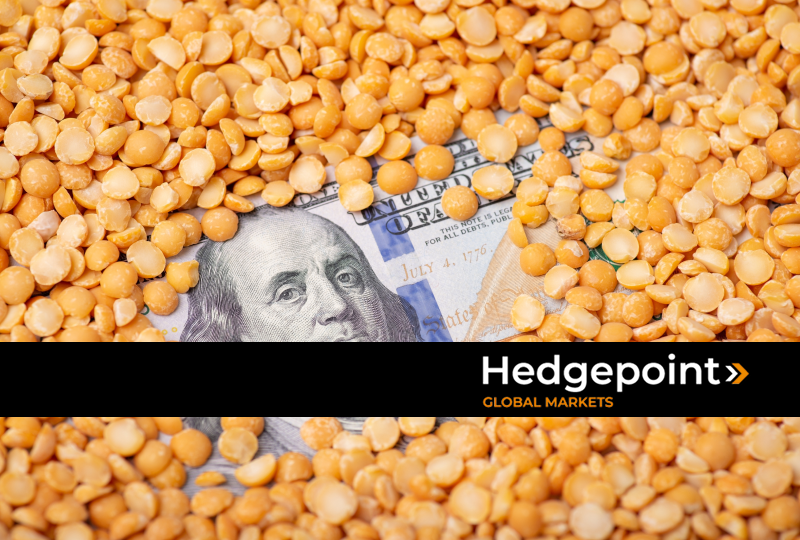
The price formation and profitability of global agribusiness respond directly to the behavior of the macroeconomy. The worsening of geopolitical tensions between the United States and Iran has increased risk aversion in the financial market, supporting indicators such as the volatility index (VIX) and boosting traditional safe-haven assets such as gold and the energy complex.
At the same time, the Brazilian domestic environment reflects the effects of maintaining the Selic rate at high levels, which acts as an important attraction for foreign capital. This flow of funds corroborates the relative appreciation of the Real and contributes to the dynamics of global weakening of the American currency. This set of variables directly affects the tripod that determines the rural producer's revenue: the quotations on the Chicago Stock Exchange (CBOT), the exchange rate and the port premium (basis). Corporate planning therefore requires integrated monitoring that goes beyond traditional climate analysis.
Follow more detailed analysis in this article:
The final price received for the commercialization of grains is based on the combination of international quotations on the stock exchange, the currency conversion rate and the physical premiums practiced in the ports. Global macroeconomic instabilities exert specific pressures on each of these variables, reconfiguring the sector's profitability levels.
The movement of exchange rate weakening of the American currency directly reduces the turnover in local currency obtained from agricultural exports. In practice, even when quotations on the Chicago Stock Exchange operate at stable or sustained levels, the relative appreciation of the Brazilian currency means that each dollar invoiced results in fewer Reais in the final conversion.
This movement squeezes the producer's operating margins and reduces the relative competitiveness of the Brazilian grain in the foreign market. The main counterbalance to this loss of revenue occurs at the end of imported inputs, since fertilizers, pesticides and machinery tend to register price declines in Reais at the purchase counter, temporarily alleviating the cost of production.
The intensification of logistical and political tensions in the Middle East caused the rise of the VIX index, considered the indicator of volatility and risk aversion in the global market. The advance of this indicator causes large investment funds to liquidate or reduce their long positions in agricultural commodities to direct capital towards safe havens, such as gold and energy assets.
For the production chain, this withdrawal of liquidity generates more intense and unpredictable oscillations in the future screens of the CBOT. In addition, the lower predictability widens the difference between the buy and sell prices (spreads), making origination difficult and slowing down the pace of business in the physical market.
Global macroeconomic indicators also act as vectors of cost inflation for the crop, operating as a gear that connects the oil sector directly to the daily expenses of the field.
The escalation in the price of a barrel of oil puts pressure on domestic logistics costs through the increase in the price of diesel fuel and road and sea freight rates. This increase in energy prices affects the nitrogen fertilizer industry in parallel, especially urea.
The global chemical manufacturing and synthesis of urea is directly dependent on international prices for natural gas and petrochemical refining. In this way, the cost shock in the energy complex inflates the value per hectare at the input counter, contracting the producer's financial margins even if the grains register nominal appreciation.
The appreciated level of oil provides economic support to the renewable fuel market, sustaining industrial demand for corn, soybeans and ethanol. However, the market is influenced by the prospect that the US central bank (Federal Reserve) will keep interest rates high for a longer period, a dynamic globally characterized as "Higher for Longer".
Didactically, high interest rates in the United States raise the cost of international financing, make global credit more expensive for trading companies and exporters to carry inventories, and slow down world economic growth, limiting the potential demand and prices of commodities in the long term.
An economic environment where American interest rates, the national exchange rate and energy inputs directly determine the net margin of the crop requires the evolution of traditional marketing strategies. The exclusive dependence on sales in the physical market exposes the revenue to variables that operate outside the producer's control.
Keep following the Hedgepoint HUB to understand the evolution of macroeconomic variables in real time and access technical analysis that underpins the best financial protection decisions.
Rua Funchal, 418, 18º andar - Vila Olímpia São Paulo, SP, Brasil
Contato
(00) 99999-8888 example@mail.com


Section
Home
O que Fazemos
Mercado
Quem Somos
HUB
Blog
Esta página foi preparada pela Hedgepoint Schweiz AG e suas afiliadas (“Hedgepoint”) exclusivamente para fins informativos e instrutivos, sem o objetivo de estabelecer obrigações ou compromissos com terceiros, nem de promover uma oferta ou solicitação de oferta de venda ou compra de quaisquer valores mobiliários, commodity interests ou produtos de investimento.
A Hedgepoint e suas associadas renunciam expressamente a qualquer uso das informações contidas neste documento que direta ou indiretamente resulte em danos ou prejuízos de qualquer natureza. As informações são obtidas de fontes que acreditamos serem confiáveis, mas não garantimos a atualidade ou precisão dessas informações.
O trading de commodity interests, como futuros, opções e swaps, envolve um risco substancial de perda e pode não ser adequado para todos os investidores. Você deve considerar cuidadosamente se esse tipo de negociação é adequado para você, levando em conta sua situação financeira. O desempenho passado não é necessariamente indicativo de resultados futuros. Os clientes devem confiar em seu próprio julgamento independente e/ou consultores antes de realizar qualquer transação.
A Hedgepoint não fornece consultoria jurídica, tributária ou contábil, sendo de sua responsabilidade buscar essas orientações separadamente.
A Hedgepoint Schweiz AG está organizada, constituída e existente sob as leis da Suíça, é afiliada à ARIF, a Associação Romande des Intermédiaires Financiers, que é uma Organização de Autorregulação autorizada pela FINMA. A Hedgepoint Commodities LLC está organizada, constituída e existente sob as leis dos Estados Unidos, sendo autorizada e regulada pela Commodity Futures Trading Commission (CFTC) e é membro da National Futures Association (NFA), atuando como Introducing Broker e Commodity Trading Advisor. A Hedgepoint Global Markets Limited é regulada pela Dubai Financial Services Authority. O conteúdo é direcionado a Clientes Profissionais e não a Clientes de Varejo. A Hedgepoint Global Markets PTE. Ltd está organizada, constituída e existente sob as leis de Singapura, isenta de obter uma licença de serviços financeiros conforme o Segundo Anexo do Securities and Futures (Licensing and Conduct of Business) Act, pela Monetary Authority of Singapore (MAS). A Hedgepoint Global Markets DTVM Ltda. é autorizada e regulada no Brasil pelo Banco Central do Brasil (BCB) e pela Comissão de Valores Mobiliários (CVM). A Hedgepoint Serviços Ltda. está organizada, constituída e existente sob as leis do Brasil. A Hedgepoint Global Markets S.A. está organizada, constituída e existente sob as leis do Uruguai.
Em caso de dúvidas não resolvidas no primeiro contato com o atendimento ao cliente (client.services@hedgepointglobal.com), entre em contato com o canal de ouvidoria interna (ombudsman@hedgepointglobal.com – global ou ouvidoria@hedgepointglobal.com – apenas Brasil) ou ligue para 0800-8788408 (apenas Brasil).
Integridade, ética e transparência são valores que guiam nossa cultura. Para fortalecer ainda mais nossas práticas, a Hedgepoint possui um canal de denúncias para colaboradores e terceiros via e-mail ethicline@hedgepointglobal.com ou pelo formulário Ethic Line – Hedgepoint Global Markets.
Nota de segurança: Todos os contatos com clientes e parceiros são realizados exclusivamente por meio do nosso domínio @hedgepointglobal.com. Não aceite informações, boletos, extratos ou solicitações de outros domínios e preste atenção especial a variações em letras ou grafias, pois podem indicar uma situação fraudulenta.
“Hedgepoint” e o logotipo “Hedgepoint” são marcas de uso exclusivo da Hedgepoint e/ou de suas afiliadas. O uso ou reprodução é proibido, a menos que expressamente autorizado pela HedgePoint.
Além disso, o uso de outras marcas neste documento foi autorizado apenas para fins de identificação. Isso, portanto, não implica quaisquer direitos da HedgePoint sobre essas marcas ou implica endosso, associação ou aprovação pelos proprietários dessas marcas com a Hedgepoint ou suas afiliadas.
aA Hedgepoint Global Markets é correspondente cambial do Ebury Banco de Câmbio, de acordo com a resolução CMN Nº 4.935, DE 29 DE JULHO DE 2021, Artigo 14 do Banco Central do Brasil (BACEN).
Para mais informações sobre nosso parceiro, serviços disponíveis, atendimento e ouvidoria, acesse o link a seguir: https://br.ebury.com/
.png)