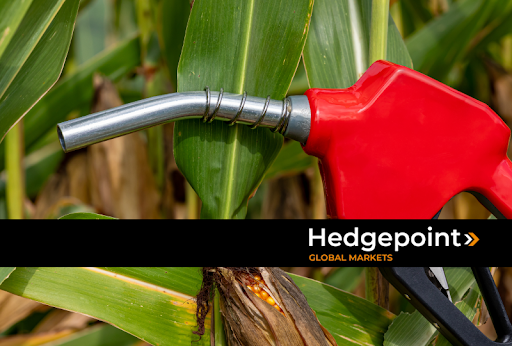
Sugar Prices: Understand how the peak of the 2026/27 harvest in the Center-South, rising Brent crude oil prices, and ethanol parity are shaping the mills’ production mix.
-1.png)
The global sugar market entered the second half of 2026 with a different dynamic than that observed at the beginning of the year. Although Brazilian supply remains robust, the deteriorating outlook for the 2026/27 Northern Hemisphere crop has significantly reduced the expected surplus for the global market, making the balance between supply and demand less comfortable. In this context, the peak of sugarcane processing and crushing in Brazil’s Center-South region takes on even greater importance for global supply.
At the same time, determining the industrial mix between sugar and ethanol is no longer an exclusively agricultural decision but rather reflects a range of economic and geopolitical factors. The sustained high prices of Brent crude oil, driven by tensions in the Middle East and risks to the global energy supply, directly influence the competitiveness of fuels in the Brazilian market.
At the same time, persistent global inflation, continued high interest rates in major economies, and exchange rate volatility also affect the business decisions of sugar mills and market participants.
Here are some key themes from this analysis:
Despite the rains that delayed part of the crushing season, the outlook for the 2026/27 Central-South harvest remains virtually unchanged. The projection remains at 635 million metric tons of sugarcane, with an ATR slightly higher than initially expected and a sugar mix of approximately 47.3%. If the price ratio between sugar and ethanol continues to favor sugar, there is still potential for this mix to increase over the course of the season.
The behavior of El Niño continues to be monitored, but its impact on the Center-South region tends to differ from that observed in other producing regions. Historically, the phenomenon has shown a low correlation with Brazil’s main sugarcane-producing areas. During more intense El Niño events, increased rainfall in southern São Paulo and Mato Grosso do Sul may delay part of the harvest but could also benefit sugarcane development toward the end of the harvest season, thereby boosting the region’s productivity.
In the North and Northeast, however, the situation requires closer attention, since El Niño typically causes drier conditions and higher temperatures, which could affect the development of future crops.
On the international front, climate concerns are concentrated primarily in the Northern Hemisphere. In India, production is estimated at approximately 27.3 million metric tons, down from the previous harvest, and the country is not expected to export sugar in 2026/27. If weather conditions deteriorate, there is even a possibility of imports, further reducing global availability.
In Thailand, expectations of a more intense El Niño have led to a reduction in the projected sugarcane crush to about 88 million metric tons, with exports estimated at between 6 and 6.5 million metric tons.
Europe is also facing climate challenges, with declining sugar beet yields and a growing need for imports, while China is taking a more cautious approach, expanding its domestic production and reducing its reliance on foreign purchases.
This combination of factors has led Hedgepoint to significantly revise its outlook for the global balance. The expected surplus has been reduced to approximately 1.8 to 2 million metric tons, down from previous estimates of close to 4 million metric tons.
Although the market remains in surplus, the gap between supply and demand has narrowed, supporting a firmer price outlook, especially for 2027 contracts.
The distribution of economic incentives in the sugar-ethanol sector continues to be strongly influenced by the international energy market. The sustained high price of Brent crude oil puts upward pressure on gasoline prices, increasing ethanol’s economic competitiveness in the domestic market. With more attractive margins for biofuel, the economic incentive to divert part of the sugarcane crop to ethanol production is growing.
In addition, public policies related to the fuel market can also alter this balance. The potential adoption of the E32 blend in gasoline is likely to increase demand for anhydrous ethanol, reducing the sugar surplus and raising the expected floor for international prices. Conversely, any gasoline subsidies could reduce ethanol’s competitiveness, encouraging mills to increase sugar production.
The speed at which ethanol consumption responds at the pumps depends primarily on the price ratio between the biofuel and gasoline. Although Brazilian consumers are highly sensitive to this price parity, the pace at which demand adjusts is also influenced by structural factors, such as state tax policies, logistical efficiency, and the population’s income level. These factors determine the speed at which the product is sold and, consequently, influence the mills’ decisions regarding the allocation of raw materials.
Despite the incentives provided by the energy market, the flexibility to significantly alter the industrial mix remains limited by commercial factors. A significant portion of future sugar production has already been locked in through hedging transactions on international exchanges and long-term export contracts.
These constraints limit the mills’ ability to quickly redirect sugarcane toward ethanol production, thereby serving as a key factor supporting raw sugar prices. At the same time, the reduction in exportable supply from the Northern Hemisphere reinforces Brazil’s role as the primary supplier balancing the global market, thereby increasing the importance of marketing decisions throughout the harvest season.
Managing results in the sugar-energy sector requires taking a unified view of the business, since the price of sugar in New York, the price of ethanol at distributors, and the exchange rate move in tandem. When the weather or the oil market fluctuates, profit margins change rapidly, making hedging strategies the only guarantee of predictability for the cash flow of mills and buyers.
Follow further analysis of these dynamics on the Hedgepoint HUB and talk to our team to structure the ideal protection for your business planning.
Rua Funchal, 418, 18º andar - Vila Olímpia São Paulo, SP, Brasil
Contato
(00) 99999-8888 example@mail.com


Section
Home
O que Fazemos
Mercado
Quem Somos
HUB
Blog
Esta página foi preparada pela Hedgepoint Schweiz AG e suas afiliadas (“Hedgepoint”) exclusivamente para fins informativos e instrutivos, sem o objetivo de estabelecer obrigações ou compromissos com terceiros, nem de promover uma oferta ou solicitação de oferta de venda ou compra de quaisquer valores mobiliários, commodity interests ou produtos de investimento.
A Hedgepoint e suas associadas renunciam expressamente a qualquer uso das informações contidas neste documento que direta ou indiretamente resulte em danos ou prejuízos de qualquer natureza. As informações são obtidas de fontes que acreditamos serem confiáveis, mas não garantimos a atualidade ou precisão dessas informações.
O trading de commodity interests, como futuros, opções e swaps, envolve um risco substancial de perda e pode não ser adequado para todos os investidores. Você deve considerar cuidadosamente se esse tipo de negociação é adequado para você, levando em conta sua situação financeira. O desempenho passado não é necessariamente indicativo de resultados futuros. Os clientes devem confiar em seu próprio julgamento independente e/ou consultores antes de realizar qualquer transação.
A Hedgepoint não fornece consultoria jurídica, tributária ou contábil, sendo de sua responsabilidade buscar essas orientações separadamente.
A Hedgepoint Schweiz AG está organizada, constituída e existente sob as leis da Suíça, é afiliada à ARIF, a Associação Romande des Intermédiaires Financiers, que é uma Organização de Autorregulação autorizada pela FINMA. A Hedgepoint Commodities LLC está organizada, constituída e existente sob as leis dos Estados Unidos, sendo autorizada e regulada pela Commodity Futures Trading Commission (CFTC) e é membro da National Futures Association (NFA), atuando como Introducing Broker e Commodity Trading Advisor. A Hedgepoint Global Markets Limited é regulada pela Dubai Financial Services Authority. O conteúdo é direcionado a Clientes Profissionais e não a Clientes de Varejo. A Hedgepoint Global Markets PTE. Ltd está organizada, constituída e existente sob as leis de Singapura, isenta de obter uma licença de serviços financeiros conforme o Segundo Anexo do Securities and Futures (Licensing and Conduct of Business) Act, pela Monetary Authority of Singapore (MAS). A Hedgepoint Global Markets DTVM Ltda. é autorizada e regulada no Brasil pelo Banco Central do Brasil (BCB) e pela Comissão de Valores Mobiliários (CVM). A Hedgepoint Serviços Ltda. está organizada, constituída e existente sob as leis do Brasil. A Hedgepoint Global Markets S.A. está organizada, constituída e existente sob as leis do Uruguai.
Em caso de dúvidas não resolvidas no primeiro contato com o atendimento ao cliente (client.services@hedgepointglobal.com), entre em contato com o canal de ouvidoria interna (ombudsman@hedgepointglobal.com – global ou ouvidoria@hedgepointglobal.com – apenas Brasil) ou ligue para 0800-8788408 (apenas Brasil).
Integridade, ética e transparência são valores que guiam nossa cultura. Para fortalecer ainda mais nossas práticas, a Hedgepoint possui um canal de denúncias para colaboradores e terceiros via e-mail ethicline@hedgepointglobal.com ou pelo formulário Ethic Line – Hedgepoint Global Markets.
Nota de segurança: Todos os contatos com clientes e parceiros são realizados exclusivamente por meio do nosso domínio @hedgepointglobal.com. Não aceite informações, boletos, extratos ou solicitações de outros domínios e preste atenção especial a variações em letras ou grafias, pois podem indicar uma situação fraudulenta.
“Hedgepoint” e o logotipo “Hedgepoint” são marcas de uso exclusivo da Hedgepoint e/ou de suas afiliadas. O uso ou reprodução é proibido, a menos que expressamente autorizado pela HedgePoint.
Além disso, o uso de outras marcas neste documento foi autorizado apenas para fins de identificação. Isso, portanto, não implica quaisquer direitos da HedgePoint sobre essas marcas ou implica endosso, associação ou aprovação pelos proprietários dessas marcas com a Hedgepoint ou suas afiliadas.
aA Hedgepoint Global Markets é correspondente cambial do Ebury Banco de Câmbio, de acordo com a resolução CMN Nº 4.935, DE 29 DE JULHO DE 2021, Artigo 14 do Banco Central do Brasil (BACEN).
Para mais informações sobre nosso parceiro, serviços disponíveis, atendimento e ouvidoria, acesse o link a seguir: https://br.ebury.com/