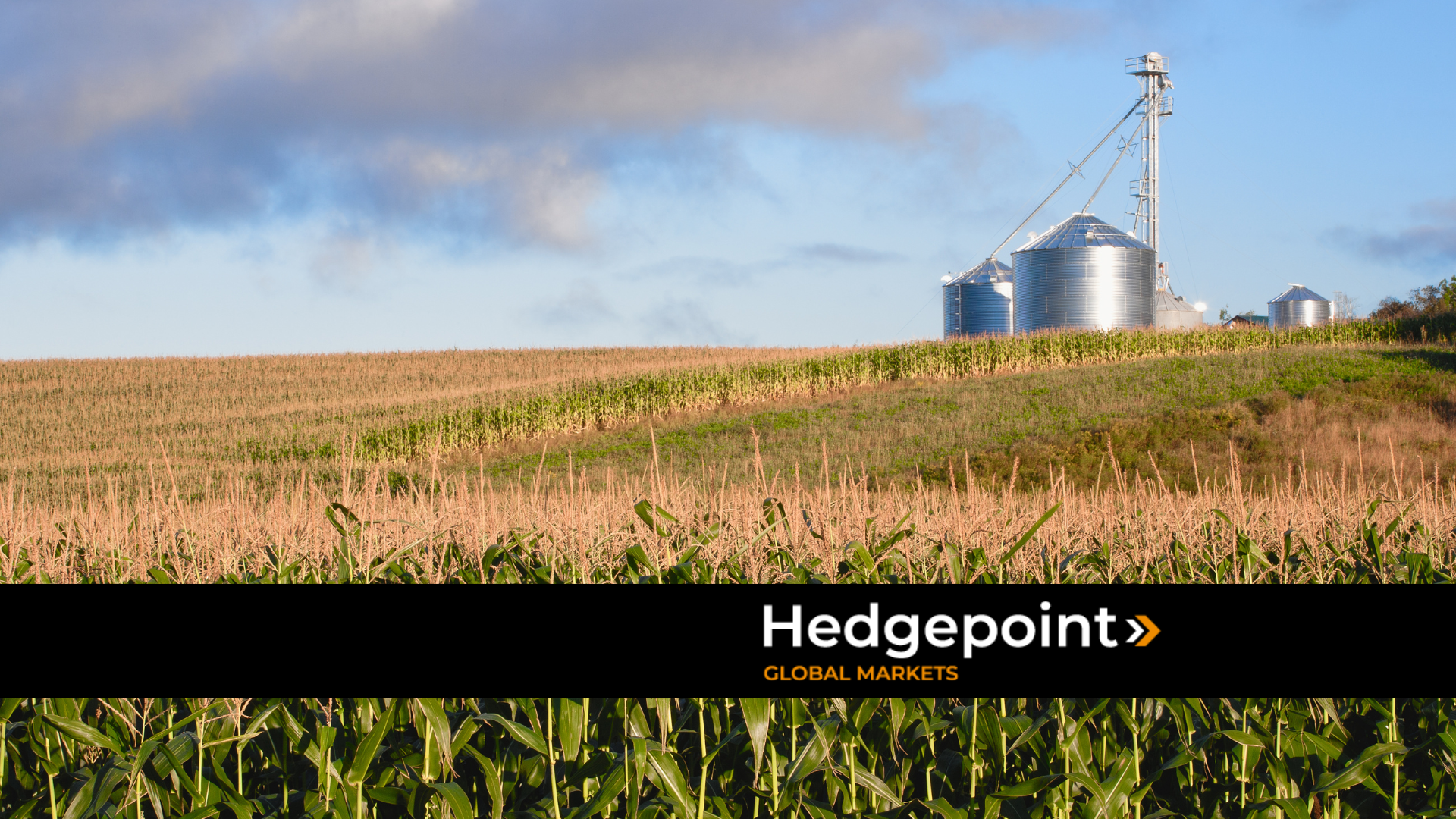
Discover how Argentina’s weather in February is critical to soybean and corn productivity and how it increases price volatility in the commodities market.
.png)
The weather in Argentina during the month of February is decisive in determining the success or failure of the productive potential of South America’s agricultural calendar, especially in the soybean and corn markets.
This period is considered critical, as a large portion of the crops enters the reproductive phase, which is highly sensitive to thermal and water stress.
Enjoy the read!
February coincides with the flowering stage (R1–R2) and the onset of pod formation (R3) for most of the soybean crop. At the same time, many areas planted with corn enter the stages of tasseling, pollination, and the beginning of grain filling.
These phases are extremely sensitive to water and heat stress. A lack of rain or a few days of extreme heat can significantly reduce the yield potential of both crops.
In addition, high temperatures during the reproductive period can affect flower fertilization and reduce the final number of grains per plant. While soybeans generally have a greater capacity to compensate, depending on the duration of the stress, corn reacts more quickly, and losses can occur after just a few days of heat or drought during pollination.
The main soybean and corn-producing regions that most influence the market are the areas of Argentina’s core belt, particularly Buenos Aires, Córdoba, Santa Fe, and Entre Ríos, which together account for about 70–80% of national production. Therefore, any weather event in these provinces acts as a direct impact factor on the global market.
However, the climate in Argentina should not be analyzed in isolation, as it is linked to three key factors:
Soybean and corn contracts on the CBOT react primarily to three factors: daily weather updates, reports from Argentine exchanges (Rosario and Buenos Aires), and USDA reports.
Thus, when weather forecasts indicate deteriorating conditions, the market quickly incorporates a climate risk premium, anticipating potential revisions to production estimates.
While January is still relatively early to estimate definitive weather-related losses, volatility increases in February, as it becomes possible to measure grain production potential more accurately. At this point, the risk premium begins to significantly impact CBOT prices.
March, on the other hand, already reflects the full extent of the damage, which helps reduce the level of uncertainty. This scenario explains why the market reacts more strongly to weather-related news in February.
There are three main factors that cause concern regarding volatility:
7- to 15-day weather forecasts carry significant weight in price formation. If models indicate regular rainfall, the market tends to reduce the weather premium.
Conversely, if the forecast points to hot, dry weather, productivity estimates decline and prices rise. Typically, short-term contracts (March/May) react more quickly to weather news.
Long-term contracts (November/December), on the other hand, reflect the global balance of supply and demand to a greater extent. For this reason, the impact of the weather in Argentina usually first appears in the spreads between maturities.
During periods of high volatility, such as in February, timing is key for producers and consumers to align their business decisions with weather uncertainty and protect themselves. In this context, the market typically relies on three main strategies:
In addition, it is important for producers to pay attention to the most frequent mistakes in the market, such as:
Therefore, the best approach is usually a phased strategy, combining partial sales or purchases, hedging with options, and constant monitoring of crop updates.
In addition to rainfall patterns in Argentina during February and March, it is essential to monitor the final size of the Brazilian harvest and global demand for corn and soybeans, particularly from China.
If the weather remains erratic during the reproductive period of these crops, the market could continue to factor in weather premiums into prices, keeping volatility high.
Quality information and market intelligence are essential for navigating the volatility caused by the weather in Argentina and by fluctuations on the CBOT. At Hedgepoint, you’ll find technical expertise and advanced tools to transform weather data into strategic financial protection decisions.
Would you like to track all the market movements, reports, and analyses that influence the grain market in real time? Subscribe to Hedgepoint Hub and get access to the essential content you need to manage your risks with precision.
Rua Funchal, 418, 18º andar - Vila Olímpia São Paulo, SP, Brasil
Contato
(00) 99999-8888 example@mail.com


Section
Home
O que Fazemos
Mercado
Quem Somos
HUB
Blog
Esta página foi preparada pela Hedgepoint Schweiz AG e suas afiliadas (“Hedgepoint”) exclusivamente para fins informativos e instrutivos, sem o objetivo de estabelecer obrigações ou compromissos com terceiros, nem de promover uma oferta ou solicitação de oferta de venda ou compra de quaisquer valores mobiliários, commodity interests ou produtos de investimento.
A Hedgepoint e suas associadas renunciam expressamente a qualquer uso das informações contidas neste documento que direta ou indiretamente resulte em danos ou prejuízos de qualquer natureza. As informações são obtidas de fontes que acreditamos serem confiáveis, mas não garantimos a atualidade ou precisão dessas informações.
O trading de commodity interests, como futuros, opções e swaps, envolve um risco substancial de perda e pode não ser adequado para todos os investidores. Você deve considerar cuidadosamente se esse tipo de negociação é adequado para você, levando em conta sua situação financeira. O desempenho passado não é necessariamente indicativo de resultados futuros. Os clientes devem confiar em seu próprio julgamento independente e/ou consultores antes de realizar qualquer transação.
A Hedgepoint não fornece consultoria jurídica, tributária ou contábil, sendo de sua responsabilidade buscar essas orientações separadamente.
A Hedgepoint Schweiz AG está organizada, constituída e existente sob as leis da Suíça, é afiliada à ARIF, a Associação Romande des Intermédiaires Financiers, que é uma Organização de Autorregulação autorizada pela FINMA. A Hedgepoint Commodities LLC está organizada, constituída e existente sob as leis dos Estados Unidos, sendo autorizada e regulada pela Commodity Futures Trading Commission (CFTC) e é membro da National Futures Association (NFA), atuando como Introducing Broker e Commodity Trading Advisor. A Hedgepoint Global Markets Limited é regulada pela Dubai Financial Services Authority. O conteúdo é direcionado a Clientes Profissionais e não a Clientes de Varejo. A Hedgepoint Global Markets PTE. Ltd está organizada, constituída e existente sob as leis de Singapura, isenta de obter uma licença de serviços financeiros conforme o Segundo Anexo do Securities and Futures (Licensing and Conduct of Business) Act, pela Monetary Authority of Singapore (MAS). A Hedgepoint Global Markets DTVM Ltda. é autorizada e regulada no Brasil pelo Banco Central do Brasil (BCB) e pela Comissão de Valores Mobiliários (CVM). A Hedgepoint Serviços Ltda. está organizada, constituída e existente sob as leis do Brasil. A Hedgepoint Global Markets S.A. está organizada, constituída e existente sob as leis do Uruguai.
Em caso de dúvidas não resolvidas no primeiro contato com o atendimento ao cliente (client.services@hedgepointglobal.com), entre em contato com o canal de ouvidoria interna (ombudsman@hedgepointglobal.com – global ou ouvidoria@hedgepointglobal.com – apenas Brasil) ou ligue para 0800-8788408 (apenas Brasil).
Integridade, ética e transparência são valores que guiam nossa cultura. Para fortalecer ainda mais nossas práticas, a Hedgepoint possui um canal de denúncias para colaboradores e terceiros via e-mail ethicline@hedgepointglobal.com ou pelo formulário Ethic Line – Hedgepoint Global Markets.
Nota de segurança: Todos os contatos com clientes e parceiros são realizados exclusivamente por meio do nosso domínio @hedgepointglobal.com. Não aceite informações, boletos, extratos ou solicitações de outros domínios e preste atenção especial a variações em letras ou grafias, pois podem indicar uma situação fraudulenta.
“Hedgepoint” e o logotipo “Hedgepoint” são marcas de uso exclusivo da Hedgepoint e/ou de suas afiliadas. O uso ou reprodução é proibido, a menos que expressamente autorizado pela HedgePoint.
Além disso, o uso de outras marcas neste documento foi autorizado apenas para fins de identificação. Isso, portanto, não implica quaisquer direitos da HedgePoint sobre essas marcas ou implica endosso, associação ou aprovação pelos proprietários dessas marcas com a Hedgepoint ou suas afiliadas.
aA Hedgepoint Global Markets é correspondente cambial do Ebury Banco de Câmbio, de acordo com a resolução CMN Nº 4.935, DE 29 DE JULHO DE 2021, Artigo 14 do Banco Central do Brasil (BACEN).
Para mais informações sobre nosso parceiro, serviços disponíveis, atendimento e ouvidoria, acesse o link a seguir: https://br.ebury.com/