The climate phenomenon tends to hurt wheat production in Australia and palm oil production in Southeast Asia, while it may benefit wheat crops in the United States and Argentina, according to an analysis by Hedgepoint Global Markets
El Niño is once again on the radar of global agricultural markets. Although it is a recurring climate phenomenon, its impacts vary depending on its intensity, duration, and the time of year it occurs, making the monitoring of weather conditions an essential tool for producers, exporters, industries, and other participants in commodity supply chains.
The most recent projections indicate the possibility of an active El Niño in the coming months, with the potential to extend into the Southern Hemisphere summer. Climate models currently point to a moderate-intensity event, but one that may gain strength over time, influencing temperature and precipitation patterns in key producing regions around the world.
Given this scenario, understanding how the phenomenon may affect different crops and markets is essential for decision-making. From grains such as soybeans, corn, and wheat to tropical commodities such as coffee, sugar, cocoa, and palm oil, the effects of El Niño can alter production outlooks, global availability, and, consequently, price dynamics. In this article, we analyze the key points of attention for each market and the regions that should remain in focus for market participants over the coming months.
The confirmation of a new El Niño cycle for the second half of 2026 once again places weather among the key factors to watch for global agricultural markets. Among the commodities most sensitive to the phenomenon are wheat and palm oil, which historically respond to changes in temperature and precipitation patterns caused by the warming of Pacific Ocean waters.
According to an analysis by Hedgepoint Global Markets, the climate event may create significant challenges for major wheat-exporting regions and for the world’s two largest palm oil producers, increasing risks to global supply and heightening market volatility in the coming months.
Australia Faces the Main Risks for the Wheat Market
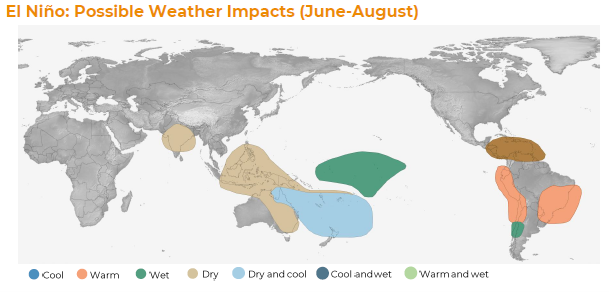
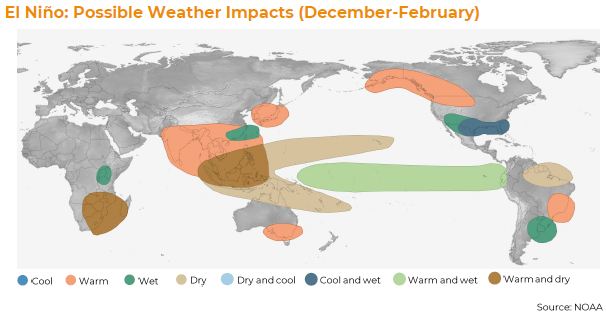
Among the world’s leading wheat exporters, Australia has historically been the country most vulnerable to El Niño events. The phenomenon is often associated with reduced rainfall and higher temperatures during critical stages of crop development, especially in producing regions in western and southeastern Australia.
As a result, the risks of water stress, productivity losses, and deterioration in grain quality increase. In more intense episodes, Australian production can suffer significant declines, reducing export availability for Asian markets and helping support international prices.
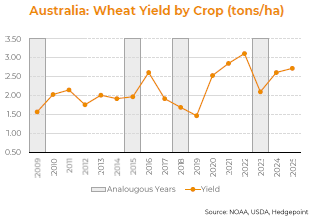
Australia’s relevance in global trade means that any significant change in its production is quickly incorporated into market participants’ expectations.
The United States and Argentina May Offset Part of the Losses
While Australia often faces more adverse conditions, the impacts of El Niño tend to be more favorable for other major wheat producers.
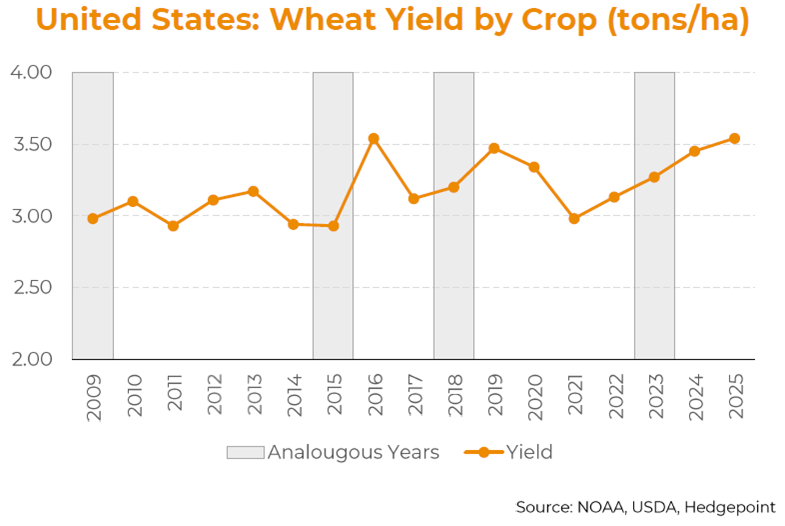
In the United States, the phenomenon generally benefits winter wheat grown in the Plains, a region that includes states such as Kansas, Oklahoma, and Texas. More regular rainfall supports the replenishment of soil moisture and reduces drought risks during crop development.
Although isolated issues related to excessive precipitation may occur in certain areas, historical patterns show that the overall outcome for U.S. production usually ranges from neutral to positive.
Argentina is also among the countries that traditionally benefit from the phenomenon. The increased frequency and regularity of rainfall during the crop cycle tends to improve planting, development, and grain-filling conditions, raising production potential.
After cycles marked by drought or neutral conditions, El Niño often contributes to a significant recovery in Argentine production and exportable surplus.
As a result, the country often expands its participation in international trade, especially in markets in South America and North Africa.
Palm Oil May Feel the Strongest Effects in 2027
In addition to wheat, the global market is closely monitoring the potential impacts of El Niño on palm oil, a commodity highly sensitive to weather conditions in Southeast Asia.
With approximately 80% of global production concentrated in Indonesia and Malaysia, changes in rainfall patterns in Southeast Asia have the potential to significantly affect the global vegetable oil balance.
El Niño often leads to reduced rainfall, higher temperatures, and intensified water stress in producing areas. However, unlike annual crops, the effects on oil palms generally appear with some delay.
Drought-related stress affects bunch formation and the physiological development of the plants, but the most significant reduction in production is usually observed between six and twelve months after the peak of the phenomenon.
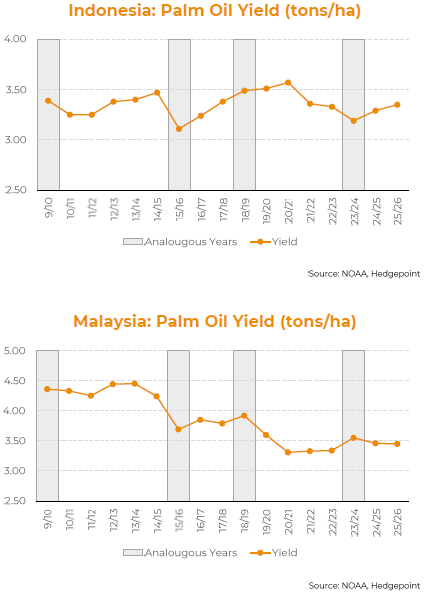
Historically, moderate and strong El Niño events have resulted in lower production in Indonesia and Malaysia, reduced global inventories, and higher international palm oil prices.
Effects May Extend Across the Entire Vegetable Oil Complex
The impacts of El Niño on palm oil are not usually limited to that commodity.
When global supply decreases, consumers and industries often increase demand for substitutes, especially soybean oil, canola oil, and sunflower oil. As a result, a more intense climate event may have supportive effects across the global vegetable oil complex, increasing competition among the food, biofuel, and industrial-use segments.
According to Luiz Fernando Gutierrez Roque, Market Intelligence Coordinator at Hedgepoint, the net effect of El Niño on the global wheat market will depend on the balance between potential losses in Australia and production gains in the United States and Argentina. In the case of palm oil, risks remain concentrated in Southeast Asia and may become more evident throughout 2027.
“The El Niño phenomenon may create challenges for the development of Australia’s wheat crop — below-average rainfall and high temperatures — while also benefiting wheat crops in the United States and Argentina — above-average rainfall. Therefore, the net effect on the global market depends on the balance between Australian losses and gains in the Americas, although more intense El Niño events often support international prices due to Australia’s relevance in global wheat trade,” he says.
Want to understand how El Niño could impact major global agricultural markets in the coming months?
Download the El Niño white paper from Hedgepoint Global Markets and gain access to a comprehensive analysis of commodities such as soybeans, corn, wheat, palm oil, cocoa, sugar, and coffee.
The study brings together climate assessments, production outlooks, and the key factors that may influence market prices and volatility, helping companies prepare for a scenario of greater uncertainty.
Rua Funchal, 418, 18º andar - Vila Olímpia São Paulo, SP, Brasil
Contato
(00) 99999-8888 example@mail.com